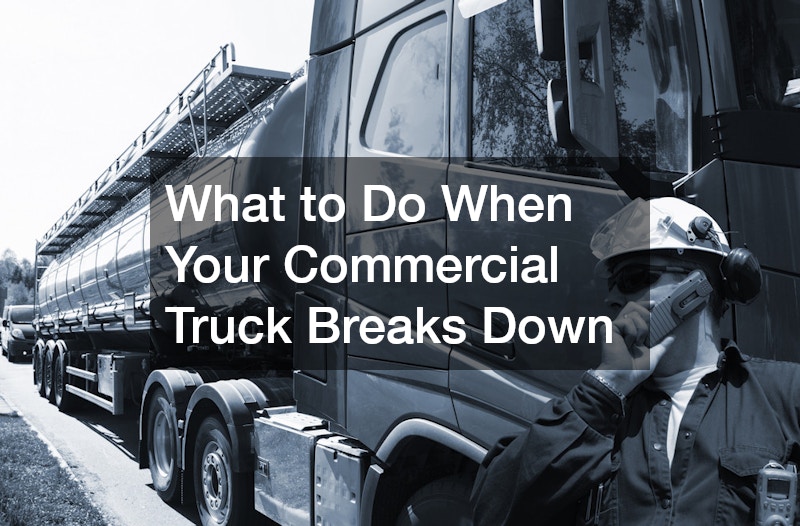

The physical sensation of a sudden mechanical failure while piloting eighty thousand pounds of steel and freight down a busy interstate is something no commercial driver ever forgets. One moment, you are monitoring your gauges, mentally calculating your next fuel stop, and calculating your hours of service. The next moment, there is a sudden loss of engine power, an aggressive shudder through the steering column, the distinct sound of an air system purging when it shouldn’t, or the blinding flash of red warning lights illuminating the dashboard. In a fraction of a second, your priority shifts from managing a delivery schedule to managing a high-stakes, life-or-death crisis. An unexpected breakdown is undeniably one of the most stressful and dangerous situations a driver can face on the open road. It is a critical logistical emergency that demands immediate, precise action.
When a rig loses power, the natural human response is often panic or deep frustration. However, making rushed decisions in the heat of the moment can lead to catastrophic accidents, exorbitant recovery bills, and entirely spoiled freight. Every action you take—from the way you apply the brakes to the information you relay to your dispatch team—dictates the financial and physical outcome of the event. A poorly handled breakdown can result in multi-vehicle collisions if the rig is not secured properly, or it can cost a carrier tens of thousands of dollars in ruined cargo and unnecessary recovery fees if the wrong type of help is dispatched.
This comprehensive guide is designed to serve as a clear, step-by-step emergency protocol for commercial drivers and fleet managers alike. We will explore exactly how to secure a failing vehicle, establish a rigid safety perimeter, diagnose the issue accurately without putting yourself in physical danger, and coordinate the exact recovery efforts required to get your freight and your equipment back on the highway safely.
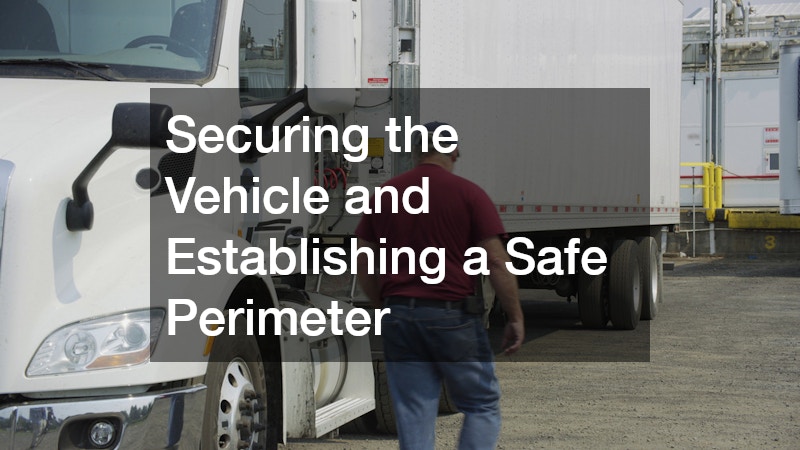
Securing the Vehicle and Establishing a Safe Perimeter
The initial seconds following a mechanical failure are the most critical. Your primary objective is to transition the vehicle from a state of moving danger to a safely parked, highly visible obstruction. How your vehicle handles this sudden failure is often a direct reflection of your routine truck maintenance, but regardless of the cause, your immediate focus must be entirely on the physical control of the steering and braking systems. Once the rig is stopped, establishing a visible perimeter is the only thing standing between you and the flow of high-speed highway traffic.
-
Coast Strategically to a Stable Shoulder or Off-Ramp: When the engine dies or an airline blows, you will rapidly lose power steering and optimal braking capacity. Do not slam on the brakes. Hard braking can cause the trailer to jackknife, especially if the air pressure is dropping unevenly across your axles or if a steer tire has suffered a blowout. Instead, keep a firm, two-handed grip on the steering wheel to fight the drag, activate your hazard lights immediately, and begin looking for a safe harbor.
-
Evaluate the Ground Conditions: You must find a wide, flat, and solid shoulder. Avoid pulling over onto soft dirt, mud, or steeply graded grass if at all possible. A loaded trailer exerts immense point-load pressure on the landing gear and tires; pulling onto soft ground can cause the rig to sink, lean dangerously, or even roll over while stationary. If an off-ramp is within a safe coasting distance, take it. The further you can get from the active flow of seventy-mile-per-hour traffic, the safer you and the recovery crews will be.
-
Deploy High-Visibility Warning Devices at Proper Distances: Once the parking brakes are pulled and the engine is off (if it hasn’t died on its own), you must secure the perimeter. Before opening your door, put on a high-visibility, reflective safety vest. Stepping out of a cab without high-visibility gear, especially at night or in heavy rain, is exceptionally dangerous. Grab your three reflective warning triangles and deploy them exactly according to federal safety regulations.
-
Triangle Placement Protocol: Place the first triangle ten feet directly behind the trailer, facing traffic. Place the second triangle one hundred feet behind the trailer, in the center of the shoulder or lane you are occupying. Place the third triangle two hundred feet behind the trailer to give approaching drivers ample time to merge away from your rig. If you are stopped on a curve or the crest of a hill, extend that furthest triangle up to five hundred feet back to ensure drivers see the warning before they see your trailer.
-
Remain Vigilant While Waiting: After the perimeter is set, get back inside the cab and keep your seatbelt fastened, or stand well safely behind the guardrail away from the vehicle. While waiting for truck roadside assistance, it is critical that you do not sit in the driver’s seat with your feet on the dashboard or sleep in the sleeper berth. If an inattentive driver strikes your parked trailer, you need to be braced for impact.
Performing a Safe Initial Assessment Without Risking Injury
Once the vehicle is secure and the warning triangles are properly deployed, your next task is to gather information. You need to understand what went wrong so you can relay accurate data to your company. However, this must be done with extreme caution. A live highway shoulder is a chaotic environment, and attempting to perform complex diagnostics or a dangerous diesel engine repair on the side of the road is a recipe for disaster. Your assessment should be strictly visual, auditory, and electronic.
-
Conduct a Visual and Auditory Perimeter Check: Carefully walk the perimeter of the rig, staying as far away from the active traffic lane as possible. Use your senses to gather clues. Look under the engine block and the transmission for pooling liquids. Bright green or pink fluid indicates a blown coolant hose, while slick black or dark brown fluid points to a catastrophic oil leak. Look at the tires and wheels; are there shredded remnants of a blowout, or is there thick, acrid smoke pouring from the trailer brakes indicating a locked shoe or a wheel seal fire?
-
Listen for Pressure Leaks: Heavy duty air systems are vital to both the suspension and the braking of the vehicle. Listen closely for the distinct hissing sound of escaping air. A ruptured airline between the tractor and the trailer (the gladhands) or a blown airbag on the suspension will quickly cripple the vehicle. If you hear a massive air leak, do not attempt to crawl under the suspension to find it, as the chassis could drop suddenly and crush you.
-
Read and Document Dashboard Fault Codes: Modern commercial vehicles are essentially rolling computer networks. When a major component fails, the electronic control module (ECM) will trigger specific diagnostic trouble codes. Cycle through your dashboard display or your electronic logging device interface to pull these codes. Write down every single alphanumeric code displayed, along with any warning text (e.g., “Stop Engine,” “EGR Valve Fault,” “Low Coolant Level”).
-
Avoid Physical Interventions: Do not open a smoking hood to remove a pressurized radiator cap; the boiling coolant can cause severe third-degree burns. Do not crawl under the axles to adjust slack adjusters while traffic is flying past your boots. Gathering the necessary fault codes and visual clues is all that is required to begin dispatching heavy trucking services to your exact location. Your job is to observe and report, not to become a field mechanic under hazardous conditions.
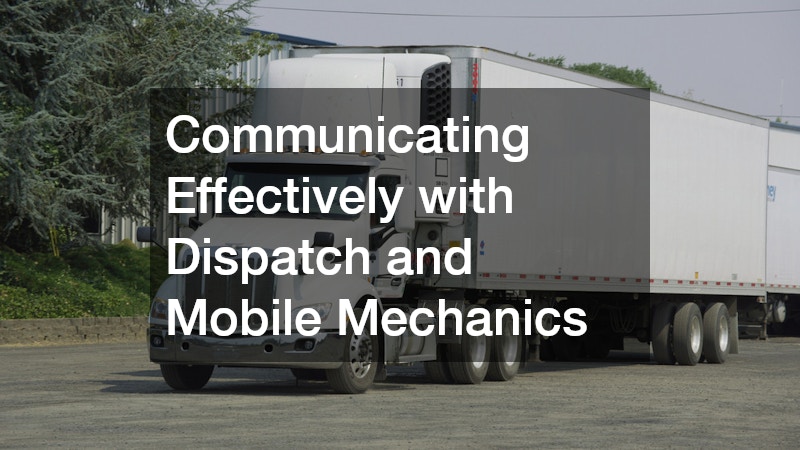
Communicating Effectively with Dispatch and Mobile Mechanics
With a clear assessment of the rig’s condition, the next critical step is communication. The quality, accuracy, and detail of the information you provide to your dispatcher or your breakdown department will dictate how quickly and efficiently the situation is resolved. Vague descriptions lead to the wrong resources being sent, which compounds delays and skyrockets costs. You must provide a comprehensive data package that allows the logistics team to make informed decisions about who to send and what parts to bring.
-
Relay Your Exact Location with Unambiguous Detail: Telling dispatch that you are “somewhere on Interstate 80 West” is entirely useless and will delay help by hours. You must be hyper-specific. Provide the exact highway, the direction of travel, the nearest mile marker, and the closest cross street or overpass. Look for prominent landmarks, weigh stations, or exit signs. Use the GPS on your electronic logging device or your smartphone to pull your exact latitude and longitude coordinates and text them to your dispatcher. This ensures that any incoming service vehicles navigate directly to your coordinates without driving past you and having to route back around.
-
Provide Your Exact Gross Vehicle Weight and Cargo Status: Whoever is coming to rescue you needs to know exactly how much weight is sitting on your axles. A fully loaded trailer weighing eighty thousand pounds requires vastly different recovery equipment than an empty trailer or a bobtail tractor. Furthermore, clearly state the nature of your cargo. If you are hauling hazardous materials (HazMat), oversized freight, or heavily bonded high-value goods, there are strict legal protocols and specialized certifications required by the recovery teams handling the load.
-
Deliver Detailed Symptoms to Prevent Wasted Service Calls: Read off the exact dashboard fault codes you documented earlier. Describe the sequence of events leading up to the failure. Did the engine temperature spike before shutting down? Did the oil pressure drop suddenly? Was there a loud mechanical bang followed by a loss of forward momentum?
-
Determine the Required Level of Intervention: By providing a highly detailed account of the symptoms, your breakdown team can determine if the situation calls for sending out semi truck roadside assistance to simply replace a blown coolant hose or swap a shredded tire, or if the vehicle requires a tow to a specialized facility equipped for comprehensive truck and trailer repairs. If a mobile mechanic arrives with a standard set of hand tools only to discover that the rig has a cracked engine block or a destroyed transmission, you have just wasted hours of valuable time and incurred an unnecessary call-out fee.
Selecting the Appropriate Recovery Equipment for Your Load
If the roadside diagnostics conclude that the vehicle cannot be repaired on the shoulder, towing becomes the only option. However, moving a stranded commercial vehicle is not a simple undertaking. It requires immense hydraulic power, specialized underlift equipment, and a deep understanding of weight distribution and chassis physics. You must work with your company to ensure the correct recovery assets are mobilized to prevent further damage to the driveline, the bumper, or the cargo.
-
Match the Wrecker to Your Rig’s Specifications: You cannot just call the first number that appears on a search engine and hope they have the right gear. A fully loaded, fifty-three-foot dry van coupled to a sleeper cab requires heavy-duty intervention. You must request specialized semi truck towing rather than hoping a standard tow truck service can handle the immense gross weight. Moving these vehicles usually requires a fifty-ton wrecker or a specialized rotator crane capable of lifting and towing the tractor without buckling the frame.
-
Communicate Driveline and Braking Status: The wrecker operator needs to know the physical state of your wheels before they arrive. Are the brakes completely locked up because the air system is empty? If so, the operator will need to manually “cage” the air brakes by crawling under the axles and turning the release bolts on the brake chambers. Is the transmission locked in gear? The operator will likely need to slide underneath the tractor and physically unbolt and drop the drive shaft to prevent the transmission from being destroyed while the truck is being pulled down the highway.
-
Ask the Right Questions Before the Wrecker is Dispatched: When coordinating with the dispatcher of the recovery company, ask highly specific logistical questions. What is their estimated, realistic time of arrival? Do they have the necessary state and municipal permits to tow an over-dimensional or fully loaded rig along your specific route to the repair shop? Do they have a secure, fenced, and well-lit drop yard where the trailer can be stored safely if the tractor needs to go to a separate dealership for engine work?
-
Confirm Payment Protocols and Clearances: Finally, confirm exactly how the recovery bill will be settled before the wrecker leaves their yard. Heavy recovery bills can easily run into thousands of dollars. Ensure the company accepts your fleet’s preferred payment methods, such as EFS checks, Comdata, or direct corporate billing. Clearing this administrative hurdle beforehand prevents hostile standoffs on the side of the highway where the wrecker driver refuses to hook up the vehicle until a massive credit card deposit is secured.
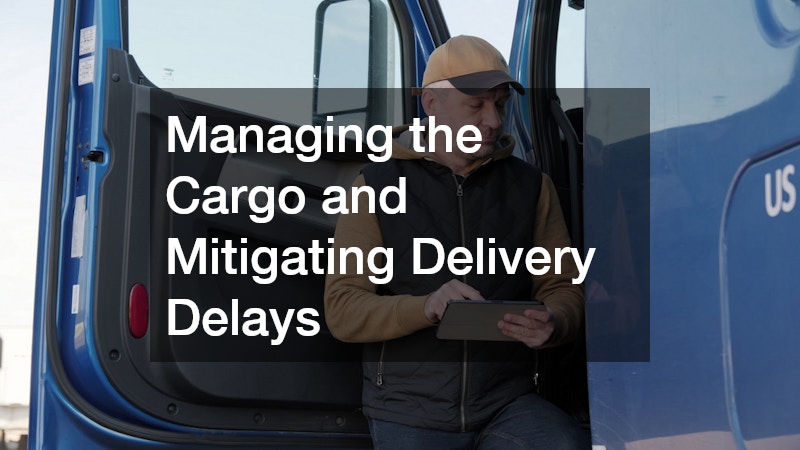
Managing the Cargo and Mitigating Delivery Delays
While the mechanical health of the tractor is a massive priority, the freight sitting inside the trailer is the lifeblood of the entire operation. Depending on what you are hauling, the cargo may be worth millions of dollars, or it may have a strict expiration clock ticking down the second the rig loses momentum. Managing the freight and mitigating delivery delays requires proactive secondary logistics. You must isolate the fate of the cargo from the fate of the broken-down tractor.
-
Secure Temperature-Controlled and Perishable Freight: If you are hauling frozen goods, fresh produce, or pharmaceuticals in a refrigerated trailer (a reefer), a breakdown is an absolute emergency. The reefer unit runs on its own independent diesel motor, but if the main tractor breaks down, you must monitor the reefer’s fuel tank closely. If the recovery process is going to take twelve to twenty-four hours, that reefer unit might run out of fuel, resulting in a total loss of the cargo. You must check the reefer fuel levels immediately and, if necessary, coordinate with local fuel delivery services to bring off-road diesel directly to the shoulder to keep the refrigeration unit running.
-
Protect High-Value and Bonded Cargo: If you are pulling electronics, alcohol, or high-value bonded freight, a stranded trailer is a prime target for cargo theft. You must ensure that the trailer doors are heavily padlocked and sealed with the appropriate tamper-evident shipping seals. In some high-risk areas, company policy or insurance mandates may require you to notify local law enforcement to request a highway patrol vehicle to sit behind the rig until recovery arrives. You must never abandon a high-value load to go find parts or a hotel room; the freight must remain under constant human supervision.
-
Coordinate a Relay Tractor or Trailer Drop: The most effective way to save a delivery schedule when a tractor dies is to decouple the load entirely. Work with your dispatch team to find a secondary “bobtail” tractor within your company’s fleet, or broker an independent owner-operator, to drive to your location.
-
Executing a Highway Trailer Drop: Dropping a loaded trailer on the shoulder of a highway is dangerous and requires precise execution. You must place heavy wooden dunnage or thick rubber pads under the landing gear feet; highway asphalt can soften in the heat, and a loaded trailer will punch right through the pavement and tip over if the feet are not supported. Once the trailer is dropped securely, the relay driver can back under it, hook up the air lines, and continue the delivery. Meanwhile, you can coordinate alternative tow truck services to pull the disabled tractor to a dealership, or utilize local tow truck services to rescue the equipment without forcing the client to wait days for their vital freight to arrive.
Surviving the Breakdown with Professionalism and Preparation
Surviving a catastrophic mechanical breakdown on a busy commercial highway is an exercise in strict procedural discipline, unwavering patience, and clear, detailed communication. When the dashboard lights up and the engine goes quiet, the margin for error drops to zero. By executing a safe, controlled coast to a stable shoulder, deploying your safety triangles correctly, and performing a purely visual assessment, you protect your own life and the lives of the motoring public. By gathering exact diagnostic codes and communicating highly specific geographic and mechanical data to your dispatchers, you ensure that the correct recovery assets are mobilized swiftly, saving your company thousands of dollars in wasted time and resources.
However, the most crucial takeaway for any commercial driver or fleet manager is that the time to prepare for a breakdown is long before the ignition key is ever turned. True professionals operate under the assumption that a breakdown is an inevitable statistical reality of the industry, not a remote possibility. This means conducting meticulous, unhurried pre-trip and post-trip inspections to catch fraying belts, weeping wheel seals, and chafing air lines before they fail at seventy miles per hour. It means maintaining a fully stocked emergency kit inside the cab, complete with high-visibility winter gear, heavy-duty flashlights with extra batteries, spare fuses, extra gladhand seals, non-perishable food, and a physical list of emergency corporate contacts in case cellular service or electronic logging devices fail.
In the high-pressure world of commercial logistics, the urge to push through a mechanical warning or rush a roadside repair to meet a tight delivery window is ever-present. But freight can always be replaced, delivery appointments can be rescheduled, and late fees can be negotiated. Human lives, however, cannot be replaced. When a truck breaks down, you must prioritize safety above the schedule, every single time. Staying calm, securing your perimeter, managing your cargo responsibly, and working systematically with specialized recovery professionals is the only acceptable way to handle the crisis. By treating a breakdown with the gravity and procedural rigor it demands, you ensure that both you and your equipment live to drive another mile.