
Most people don’t think twice about the location data their phone quietly collects every day. But when a legal dispute arises, whether it’s a car accident claim, a divorce case, or a disability benefits appeal, that same data can become a central piece of evidence. Understanding what your phone tracks, who can access it, and how it might be used can help you protect yourself and make smarter decisions if you ever find yourself in a legal fight. This article breaks down the basics so you know what to expect.

How Smartphones Track and Store Your Movements
Smartphones constantly log location data through GPS, Wi-Fi networks, Bluetooth signals, and cell tower connections, often without the user actively opening an app. This information gets stored locally on the device and, in many cases, backed up to cloud services tied to your Google or Apple account. Apps like maps, fitness trackers, weather services, and social media platforms also collect their own location logs, sometimes with more precision than your phone’s built-in settings.
Because this data accumulates automatically, many people don’t realize how detailed a record exists until they’re asked to produce it. A single day’s history might show not just where you were, but how long you stayed, what route you took, and how fast you were moving.
- GPS data pinpoints exact coordinates within a few meters
- Wi-Fi and Bluetooth connections reveal proximity to specific buildings or devices
- Cell tower pings create a rougher but still useful timeline of movement
- Cloud backups often retain history even if you delete it from your phone
- Third-party apps may store separate, independent location logs
Common Legal Situations Where Location Data Becomes Evidence
Location history shows up in a surprising range of legal matters, not just criminal cases. In personal injury claims, it can confirm or contradict where someone was at the time of an accident. In family law disputes, it might be used to establish patterns of behavior relevant to custody arrangements. In workplace disputes, employers sometimes use location logs to verify whether an employee was where they claimed to be during work hours.
Insurance disputes are another common area. If someone reports a theft or injury, insurers may request location data to check whether the claim matches the person’s actual whereabouts. Because this data is so often treated as objective proof, it can carry significant weight even when other evidence is murky or contested.
- Personal injury and car accident claims
- Child custody and divorce proceedings
- Workplace misconduct or wrongful termination cases
- Insurance fraud investigations
- Disability benefit reviews and appeals
What Location History Can Prove or Disprove in a Disability Claim
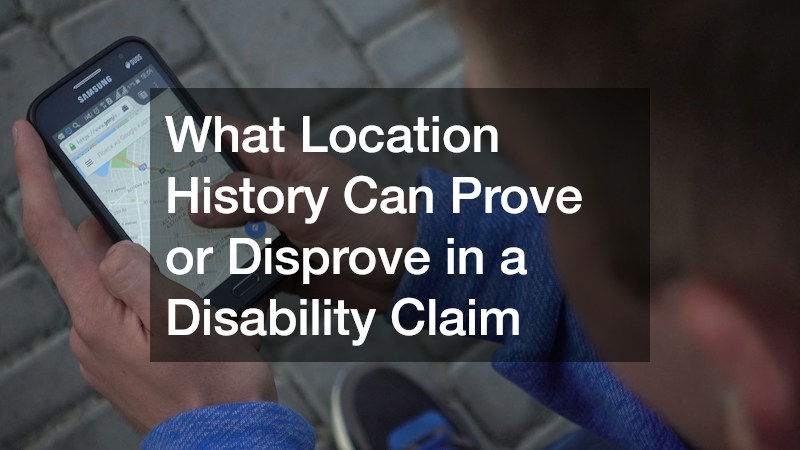
For people pursuing Social Security Disability benefits, location data can cut both ways. If a claimant says they’re unable to leave the house due to a medical condition, but their phone shows regular trips to the gym, frequent travel, or a consistent work-like schedule, that inconsistency can raise red flags with reviewers. On the other hand, location history that shows limited movement, short trips, and patterns consistent with reported limitations can actually support a claim.
This is one of the reasons many people choose to consult an SSDI attorney before submitting extensive personal data or responding to requests for digital records. An experienced advocate understands how disability examiners interpret this kind of evidence and can help claimants present their situation accurately and fairly, without unintentionally undermining their own case.
- Frequent gym visits or travel may be used to question reported limitations
- Short, infrequent trips can support claims of reduced mobility
- Gaps in data are sometimes misread as deliberate concealment
- Reviewers often cross-reference location patterns with medical records
How Attorneys and Courts Obtain Phone Location Records
Getting access to someone’s location history usually requires a legal process rather than a simple request. Attorneys can issue subpoenas to phone carriers, app companies, or cloud service providers to obtain records relevant to a case. Courts may also order a party to turn over their own device data directly if it’s deemed relevant and proportionate to the dispute.
The process can take time, and companies often push back or require specific legal language before releasing anything. Privacy laws add another layer of complexity, since providers must balance compliance with legal requests against user privacy protections. This is why most people navigating a dispute involving digital evidence choose to work with legal counsel who understands how to request, challenge, or interpret this kind of data properly.
- Subpoenas directed at carriers or app developers
- Court orders compelling a party to produce their own data
- Preservation letters requesting data not be deleted during litigation
- Expert analysis to interpret raw location logs accurately
Steps to Protect Your Privacy During a Legal Dispute
If you suspect your location data might become relevant to a legal matter, there are practical steps you can take to protect your privacy without destroying evidence improperly, which can carry serious legal consequences. Review your phone’s privacy settings and understand which apps have access to your location at all times versus only while in use. Consider whether cloud backups are storing more history than you realize, and check the retention settings on the apps you use most often.
It’s also wise to be cautious about what you post on social media, since geotagged photos and check-ins can function as an informal location record even if your phone settings are locked down. Many social security disability lawyers advise clients to think carefully about their digital footprint throughout the duration of a claim or appeal, since even casual posts can be taken out of context.
- Review app permissions and disable unnecessary location access
- Check cloud backup settings for stored historical data
- Avoid deleting data once you know it may be relevant to a case
- Be mindful of geotags and check-ins on social media
- Ask a legal professional before responding to data requests
Your phone’s location history is more detailed and more permanent than most people realize, and it can play a meaningful role in all kinds of legal disputes. Whether you’re dealing with a personal injury claim, a family law matter, or a disability appeal, understanding how this data works puts you in a stronger position. If you’re facing a situation where your digital footprint might matter, take the time to understand your rights and consider speaking with a qualified professional before sharing or deleting anything.