A single glance at a buzzing phone can change everything in an instant. Notifications for texts, calls, social media, and navigation updates compete for attention every second a driver is on the road, and that split-second distraction is often enough to cause a devastating crash. Understanding how these interruptions contribute to collisions can help drivers protect themselves and their families. This article breaks down the real dangers of notification-driven distraction and what to do if it leads to a crash.
The Science Behind Notification Distraction
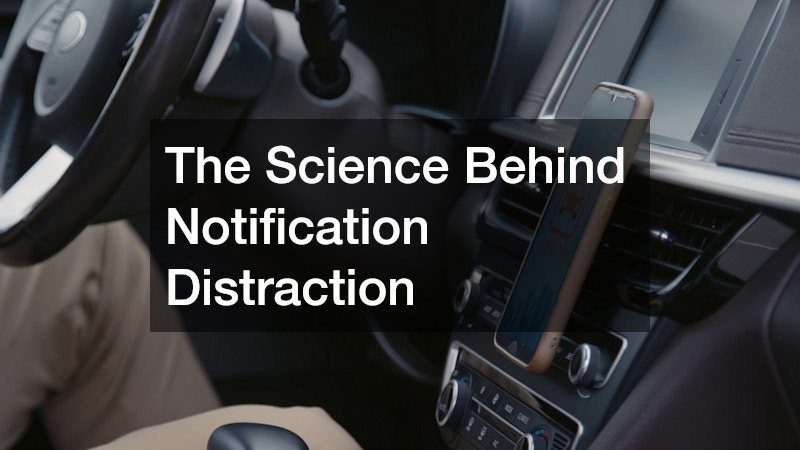
Every time a phone buzzes or lights up, the brain experiences what researchers call “attention residue,” a lingering mental pull that stays even after a driver glances away from the screen. This means the danger does not end the moment a driver looks back at the road; the brain is still processing that notification for several more seconds. A quick text or a one-word reply doesn’t just cost the two or three seconds spent looking down—it triggers a mental hangover that can last much longer. Researchers at the University of Utah have found that this kind of cognitive distraction can persist for up to 27 seconds after a driver finishes interacting with a device or voice command system. At highway speeds, that translates into traveling the length of several football fields while only partially focused on the road. The brain is essentially running two tasks at once, and driving performance suffers as a result. Studies on cognitive distraction show that this mental lag can be just as dangerous as taking your eyes off the road entirely, because reaction times slow dramatically during this window. Some research has found that reaction times while mentally distracted are comparable to those of a driver at the legal blood alcohol limit. Drivers in this state are slower to notice brake lights, slower to detect pedestrians, and less able to adjust to sudden changes in traffic flow. The unsettling part is that most drivers feel confident they’ve “recovered” as soon as their eyes return to the windshield, even though their brain is still catching up.
Unlike a passenger asking a question, a notification demands attention through sound, vibration, and visual cues all at once, making it especially difficult to ignore. This multi-sensory pull is intentional, designed by app developers to capture attention quickly, which is exactly what makes it so hazardous inside a moving vehicle. Researchers call this phenomenon “attentional capture,” a reflex response wired into the brain that prioritizes sudden sensory changes over ongoing tasks, even critical ones like driving. Studies on cognitive distraction show that it can take up to 27 seconds for a driver’s mind to fully refocus on the road after glancing at a phone, even if the phone is never physically touched. During that window, a car traveling at 55 mph covers well over the length of several football fields essentially blind to hazards ahead. The problem is compounded by what psychologists call “inattentional blindness,” where a driver’s eyes may be pointed at the road while their brain is still processing the notification they just saw. This means drivers can technically be looking forward and still miss brake lights, pedestrians, or lane changes. Because the brain cannot fully multitask between complex activities, it rapidly switches back and forth instead, and each switch carries a measurable lag in reaction time. App developers often rely on variable reward schedules, the same psychological mechanism used in slot machines, to make notifications feel urgent and worth checking immediately. This design choice is effective for engagement but dangerous behind the wheel, since it trains drivers to respond reflexively rather than rationally weigh the risk before glancing at a screen.
- A text notification can take a driver’s eyes off the road for an average of five seconds, even if the phone is never picked up
- At highway speeds of 55 mph, five seconds of inattention covers roughly 100 yards — the length of a football field
- Reaction time can slow by up to 40 percent while the brain is still processing a recent notification
- This slowed reaction time is comparable to driving with a blood alcohol level near the legal limit
- Cognitive distraction can persist for 20-30 seconds even after a phone is put away, a lag sometimes called “inattention blindness”
- During this lag, drivers may look directly at hazards like pedestrians or brake lights without truly registering them
- The brain struggles to switch attention between the notification and driving, so tasks are processed sequentially rather than at the same time
Common Ways Drivers Get Distracted on the Road
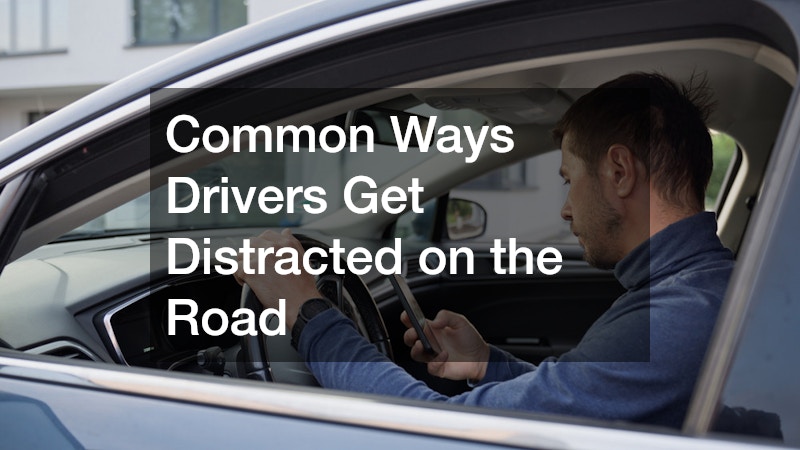
Notifications are only one piece of a larger distraction problem, but they are frequently the trigger that starts a chain reaction of unsafe behavior behind the wheel. A single alert can prompt a driver to check a text, respond to an email, or glance at a map update, each of which pulls focus away from driving for critical seconds. These behaviors often happen in combination, compounding the risk with every additional second of inattention.
Many drivers underestimate how often they check their phones, believing they are only glancing for a moment when in reality the habit has become automatic. This is particularly common with navigation apps, which many people assume are safe to use because they are technically driving-related.
- Reading or replying to text messages
- Checking social media notifications at red lights or in traffic
- Glancing at incoming call alerts
- Adjusting music or podcast apps mid-drive
- Responding to calendar reminders or work emails
How Distracted Driving Contributes to Severe Crashes
When a driver’s attention is split between the road and a notification, the margin for error shrinks dramatically. Car accident injuries resulting from distracted driving tend to be more severe because the distracted driver often fails to brake, swerve, or react in time to avoid a serious impact. Unlike a driver who is fully alert and can make split-second adjustments, a distracted driver may not even realize a collision is imminent until it is too late.
The consequences of this delayed reaction extend beyond the moment of impact. Higher speeds combined with delayed braking often lead to more forceful collisions, which translate directly into more severe physical trauma for everyone involved. This is why distraction-related crashes are frequently associated with long hospital stays, extensive rehabilitation, and lasting physical limitations.
- Whiplash and neck injuries from sudden, unexpected impacts
- Traumatic brain injuries caused by delayed braking
- Broken bones and fractures from high-speed collisions
- Spinal injuries that can result in long-term mobility issues
Steps to Take Immediately After a Notification-Related Crash
The moments after a crash caused by a distracted driver can feel overwhelming, but taking the right steps early can protect both your health and your ability to seek compensation later. Prioritizing medical attention should always come first, even if injuries seem minor at the time, since some symptoms take hours or days to appear. Documenting the scene thoroughly can also make a significant difference if you need to prove what happened.
Once safety and medical needs are addressed, gathering evidence becomes essential. Cell phone records, witness statements, and traffic camera footage can all help establish that the other driver was distracted at the time of the crash. This kind of documentation often becomes the foundation of any future claim.
- Call 911 and request medical assistance if anyone is injured
- Take photos of vehicle damage, road conditions, and visible injuries
- Collect contact information from witnesses at the scene
- Avoid discussing fault or details with the other driver’s insurance company
- Keep copies of medical records and repair estimates
When to Involve Legal Support After a Crash
Determining fault in a distraction-related crash can be more complicated than it seems, especially when the at-fault driver denies using their phone or claims the notification was unrelated to the crash. This is where personal injury lawyers can play a valuable role, helping accident victims gather the right evidence and build a clear timeline of events. Their experience with these types of cases often makes the difference between a denied claim and fair compensation.
Insurance companies frequently try to minimize payouts, especially in cases involving distracted driving where liability may be disputed. An accident lawyer can help negotiate with insurers, interpret complex policy language, and ensure that medical bills, lost wages, and long-term recovery needs are properly accounted for. Having professional guidance can relieve much of the stress that comes with navigating a claim while also recovering physically.
- Reviewing phone records and crash reports for evidence of distraction
- Calculating the full cost of medical care and future treatment
- Negotiating directly with insurance adjusters
- Explaining your rights and options in plain language
- Representing your interests if the case goes to court
Notification-driven distraction is a growing danger on the road, and its consequences can be life-altering for victims and their families. By understanding how these distractions lead to severe crashes and knowing what steps to take afterward, drivers can better protect themselves both physically and legally. If you or a loved one has been affected by a distracted driving crash, seeking medical care first and legal guidance soon after can help you move forward with confidence.